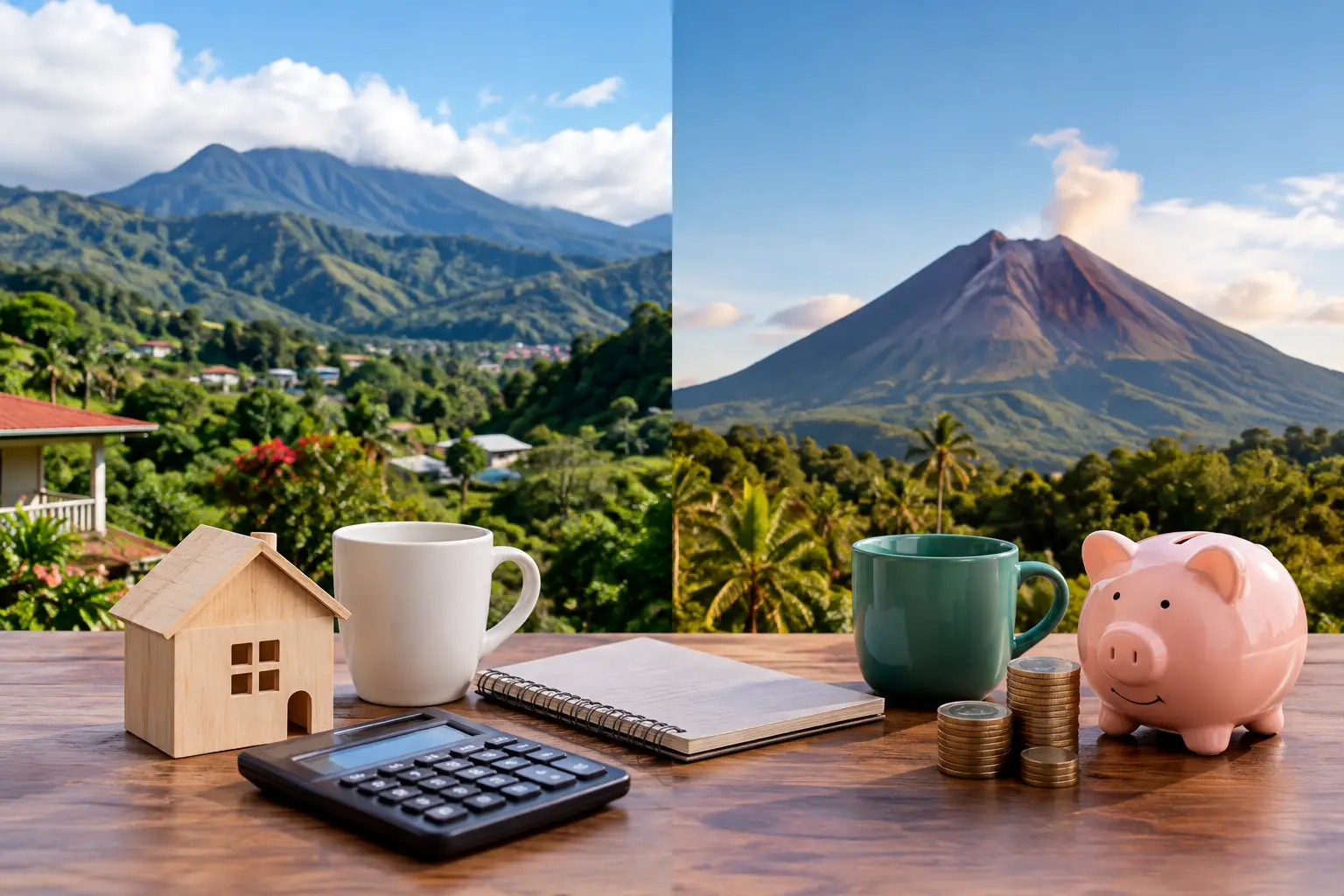
A two-bedroom rental can look attractive in both towns until you add the details that shape daily life: driving distance, heating needs, imported groceries, furnishing a home, and how often you want to be near restaurants or medical services. That is why Boquete versus Volcan living costs is not simply a question of which town has lower rents. It is a question of what kind of life you want your Panama budget to support.
Both communities sit in Chiriquí’s cooler highlands and appeal to retirees, remote professionals, and buyers seeking a more temperate alternative to coastal Panama. Boquete is the larger, more established expat destination. Volcán, in the Tierras Altas district, is quieter, more agricultural, and generally less developed for international residents. Those differences affect both the price you see upfront and the expenses that follow after closing.
Boquete Versus Volcan Living Costs: The Big Picture
For most households, Volcán can offer a lower cost of living, particularly when purchasing land, renting a modest home, or relying on locally grown food. It is not automatically inexpensive in every category, however. A household that drives frequently to David, prefers imported brands, or needs specialized healthcare may find that the savings narrow.
Boquete often carries a convenience premium. There are more established neighborhoods, restaurants, services, social groups, and rental options geared toward foreign residents. That access can make day-to-day settling easier, especially for first-time Panama buyers. It can also mean higher asking prices for homes with views, polished finishes, walkability, or proven rental appeal.
A practical working budget for a couple varies widely by lifestyle, but a comfortable renter in Boquete may spend roughly $1,800 to $3,200 per month before major travel and private insurance. In Volcán, a comparable but simpler lifestyle may fall closer to $1,500 to $2,700. These are planning ranges, not guarantees. Housing choice, vehicle ownership, and imported purchases can move either budget substantially.
Housing Is Where the Difference Is Most Visible
Boquete’s housing market is broad, but desirable inventory is competitive. Gated communities, mountain-view homes, newer condominiums, and properties near Bajo Boquete tend to command a premium. Long-term rentals can range from approximately $700 for a basic apartment or older home to $1,500, $2,500, or more for a furnished property with quality finishes, outdoor space, and reliable access.
Purchase prices in Boquete also reflect its international recognition. A buyer can still find value, particularly outside the central valley or in homes needing improvement, but turnkey properties in sought-after locations are rarely priced like undiscovered bargains. The upside is that Boquete has a deeper resale and rental audience than many smaller Chiriquí communities.
Volcán typically offers more house and land for the budget. Buyers looking for acreage, a garden, fruit trees, or a small agricultural project often start their search there for good reason. Rentals can be less expensive than Boquete, with many practical homes falling around $500 to $1,200 per month depending on condition, furnishings, location, and lot size. Newer or well-designed homes can still command higher rates.
The trade-off is inventory consistency. Volcán has fewer polished, furnished homes marketed to international renters, and construction quality varies greatly. A lower purchase price should never replace proper due diligence on title, water, road access, drainage, electrical capacity, and the true condition of the building. In the highlands, moisture management is a real ownership cost, not a cosmetic issue.
Utilities and home upkeep
Neither town has the air-conditioning expense common in Panama City or beach areas. Cooler weather reduces electricity use for many residents, but it can introduce other costs. Some households use propane heaters, dehumidifiers, hot-water systems, or fireplaces during rainy and cooler periods. Homes with poor ventilation can require more attention to mold prevention and maintenance.
Monthly electricity, water, internet, propane, and mobile service may total a few hundred dollars for a typical household, but large homes and heavy internet use raise the figure. In more rural parts of Volcán, confirm internet availability and backup options before committing. In Boquete, service is usually easier to arrange, although quality still depends on the exact neighborhood.
Groceries, Dining, and Everyday Spending
Volcán benefits from its agricultural setting. Fresh vegetables, dairy products, eggs, flowers, and locally sourced foods can be excellent value when purchased from growers, small shops, or the market. Residents who cook at home and buy seasonal produce can keep grocery spending notably below a similar lifestyle in the United States.
Boquete also has access to fresh food, along with a larger selection of specialty stores, restaurants, cafés, and international-style dining. That variety is part of the town’s appeal, but it makes it easier to spend more. Imported wine, packaged health foods, U.S. brands, and frequent restaurant meals can make a Boquete budget resemble a small U.S. town more than many buyers expect.
For a couple cooking primarily at home, groceries may reasonably run from $350 to $650 per month, depending on dietary preferences. Dining out is highly personal. A local lunch can be affordable, while regular visits to higher-end restaurants quickly become a meaningful monthly category. The lower-cost choice between the two towns is usually Volcán, but disciplined spending matters more than the town name.
Transportation Can Change the Math
Boquete is roughly a 40-minute drive from David under normal conditions, giving residents relatively convenient access to major shopping, hospitals, government offices, banking, and Tocumen-connected domestic flights. Many residents still maintain a vehicle, but the location reduces the time and fuel required for essential trips.
Volcán is farther from David, commonly about 75 to 90 minutes depending on route, traffic, and weather. It also has access to the Costa Rican border region and the broader Tierras Altas area, but it is less convenient for frequent city errands. If you own a car, budget for fuel, tires, maintenance, insurance, and the wear created by mountain roads. If you do not plan to drive, Boquete is generally easier.
Public transportation and taxis can cover some needs in both communities, but they do not deliver the flexibility many foreign residents expect. For an owner who will live part-time in Panama, transportation also affects property management. A remote home in either town may need trusted local oversight, especially during the rainy season or between tenant stays.
Healthcare, Services, and the Value of Convenience
Routine medical care is available in both areas, while David remains the regional center for hospitals, specialists, diagnostics, and larger pharmacies. Boquete’s proximity to David is a meaningful advantage for retirees or anyone managing ongoing care. Volcán residents can access local clinics and services, but should plan for longer trips when a specialist is needed.
This is one area where the lowest monthly cost is not always the best value. A home in Volcán may be less expensive, yet a buyer who expects frequent medical appointments, contractor visits, or business travel may prefer the time savings of Boquete. Conversely, a healthy buyer seeking privacy, space, and a gardening lifestyle may find Volcán’s lower property costs far more compelling.
Which Town Fits Your Budget and Goals?
Choose Boquete when convenience, a larger international community, dining options, rental demand, and faster access to David are priorities. It can cost more, but many buyers see that premium as payment for established infrastructure and a smoother transition into highland life.
Choose Volcán when you value open space, agricultural character, cooler temperatures, and the potential to buy more land or home for your investment. It rewards buyers who are comfortable with a quieter setting, longer drives, and a more hands-on approach to ownership.
The strongest decision starts with a property-specific budget, not an average-cost article. Before making an offer, compare the home’s utilities, road access, maintenance history, furnishing needs, insurance, rental potential, and the real cost of reaching the services you use most. With local guidance from an experienced Chiriquí advisor such as Nikolai Candanedo, you can evaluate both the purchase price and the lifestyle that comes with it.


Bernadette4836
I enjoyed this article and the perspective behind it. It was a good reminder to look a little more closely.